 Matsushima Bay Tours
Home › Guides › What Are the Matsushima Bay Islands?
What Are the Matsushima Bay Islands?
Matsushima is not one island. The Matsushima Bay Islands are about 260 tiny pine-covered islets scattered across a bay in Miyagi Prefecture, roughly 14 km from Sendai, and the bay counts as one of the Three Views of Japan. The scheduled loop cruise from the Central Pier threads through them in 50 minutes.
Quick answer The islands, the fame and the best way to see them
The Matsushima Bay Islands are more than 260 small pine-covered islets in Miyagi Prefecture. Matsushima means Pine Islands, and the bay is one of the Three Views of Japan. The scheduled loop from the Central Pier takes 50 minutes, or you can join a full 1-day tour from Sendai with the boat cruise included.
Key takeaways
- Start with the water: matsushima bay tours lists the cruise days and the temple walks around the pier.
- Short on time: the Matsushima Bay Cruise Day Tour from Sendai covers the loop in one day.
- Prefer walking: the Scenic Bay Walk and Temple Discovery tour pairs the shore with Zuiganji.
- Want a local host: the private samurai and oyster tour adds food and hotel transfer.
What is Matsushima famous for?
Matsushima is famous for its roughly 260 pine-clad islets in the bay, a scenery so celebrated that it ranks as one of the Three Views of Japan.
The name says it plainly. Matsushima means Pine Islands, a famous scenic site (meisho) near Sendai whose look inspired art such as the Waves at Matsushima screen. The poet Basho made the bay one of the goals of his journey north, Oku no Hosomichi. For your day, that fame comes down to three things: the boat loop through the islets, the temples beside the pier and the viewing hills around the bay. The bay cruise day tour from Sendai puts the boat loop into one 8-hour day from the city. Around the pier you find Zuiganji Zen temple, the Entsu-in mausoleum, the Godaido shrine hall and the Kanrantei tea house, all listed among the top attractions alongside the islets themselves.
One of the Three Views of Japan
Matsushima is one of the Nihon Sankei, the Three Views of Japan, and the tourist association carries that title on its own site. The other name you meet everywhere is Basho, who made the bay a goal of his road north. The section on myths below sorts out which of his stories hold up.
Source: Matsushima Tourism Association.
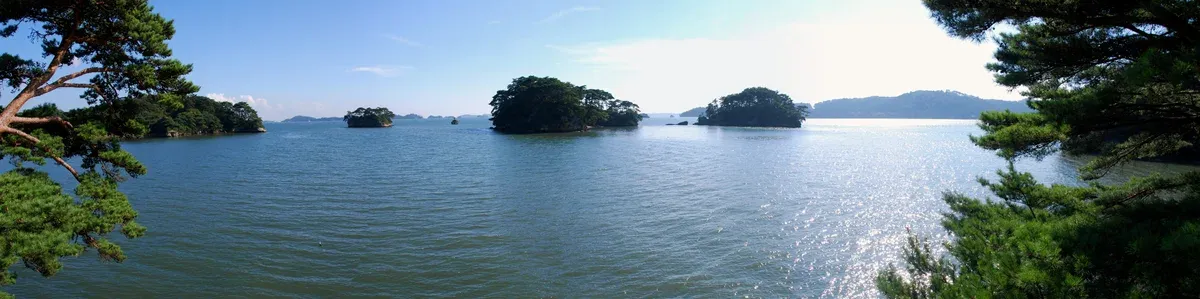
Islands in Matsushima Bay. Photo: Ivan Mlinaric, CC BY 2.0, via Wikimedia Commons
How many islands are in Matsushima Bay?
The tourist association counts about 260 small pine-covered islands, and its Japanese page says more than 260.
The most common mistake is to picture one island called Matsushima. The name covers the whole group. The tourist association's English page rounds it to 260 small pine-covered islands, and its Japanese page says more than 260. Wikipedia uses the same figure of some 260 tiny islands covered in pines, which is where the name Pine Islands comes from. For a bay day the count matters less than the scale. The islets are small, and the only way to move among them is the 50-minute loop from the Central Pier. On the Scenic Bay Walk and Temple Discovery tour you see them from the shore side before deciding if you want the boat too.
Source: Matsushima Tourism Association.
What is the most beautiful island in Japan?
No official winner exists, but Matsushima Bay is one of the Three Views of Japan, the classic list of the country's most celebrated scenery.
Beauty contests in Japan end in lists rather than winners, and the Three Views of Japan is the classic one. Matsushima Bay sits on it. Inside the bay, the islet with a story is Senganjima, recorded as the favourite island of the feudal lord Masamune Date. The islands you can actually walk onto are Fukuurajima, reached over a long vermilion bridge, and Oshima, joined to the shore by the Togetsu Bridge. Both are covered in the section on visiting the islands below.
Source: Matsushima Tourism Association.
Where is the best place to see Matsushima Bay?
The classic answer is one of the four great viewpoints, Otakamori, Tomiyama, Ogitani or Tamonzan, but for most visitors the best first look comes from a boat on the bay itself.
Japanese tradition sorts the bay into four named views, each from a different hill. Wikipedia lists them as the Magnificent View from Otakamori, the Beautiful View from Tomiyama, the Enchanting View from Ogitani and the Grand View from Tamonzan. The tourist association adds the heights and access details, which turn the legend into a plan. For a single bay day, the honest ranking is this. The boat loop first, because it is the only way to be among the islands. Ogidani second, because it shows the whole bay and sits closest to the station. The far viewpoints third, since Otakamori and Tomiyama each need a separate train ride and a climb.
The four classic viewpoints, as a plan
Here is what each one asks of you.
| Viewpoint | Named view | Height | Getting there |
|---|---|---|---|
| Otakamori (Soukan, Gorgeous View) | Magnificent View | 105.8 m | 15 minutes by car from JR Nobiru Station to the trailhead, then 20 minutes on foot to the summit, on Miyato Island |
| Tomiyama (Rekan, View of Harmonious Beauty) | Beautiful View | 116.8 m | 45 minutes on foot from JR Rikuzen-Tomiyama Station, or park about 5 cars and climb stairs about 16 minutes |
| Ogidani (Yukan, Mysterious View) | Enchanting View | 55.8 m | 25 minutes on foot from Matsushima-Kaigan Station or 5 minutes by car, then 3 minutes up stairs |
| Tamonzan (Ikan, Dynamic View) | Grand View | 55.6 m | A cliff-top park at Daigasaki in Shichigahama. No travel time is published, so plan it by car. |
Two easy viewpoints near the station
Saigyo Modoshi no Matsu Park frames the bay islands from a platform and is a cherry blossom spot with over 260 trees in the park. It is 5 minutes by car from Matsushima-Kaigan Station, but the Panorama Line road up to it closes in winter, so check before you go in the cold months.
Ogidani doubles as an autumn-leaf spot and shows the whole bay. Parking there holds only a few cars, so walking or a short taxi is simpler.
Tours That Fit
These are the bay days that put you in front of the islands without planning the boats yourself.
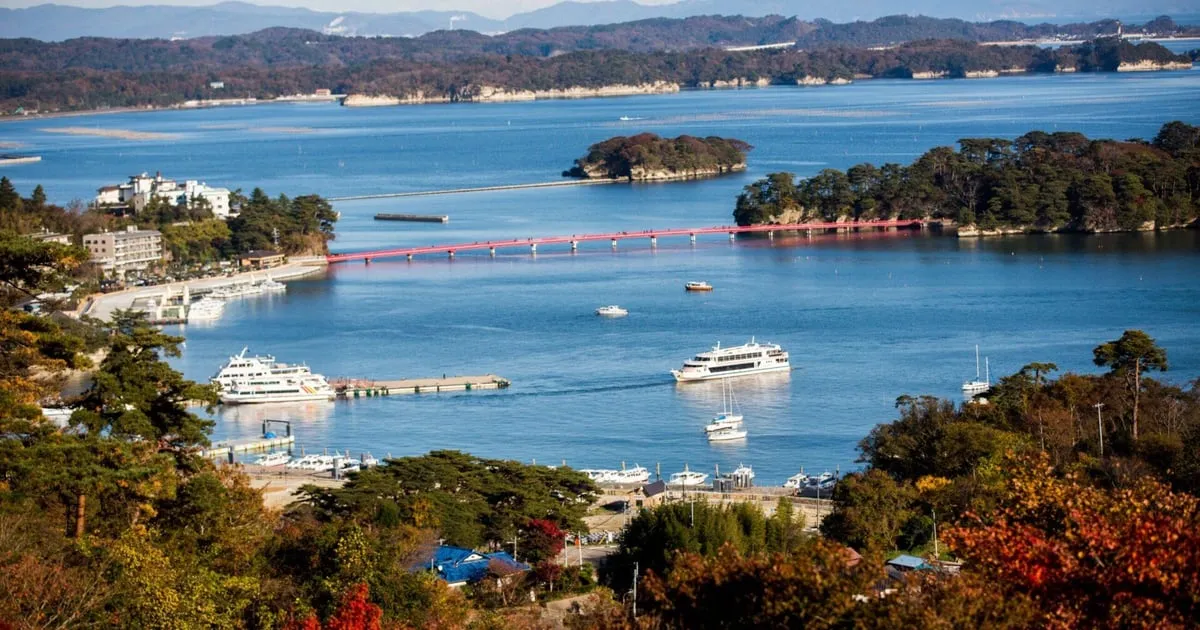
1-Day Tour from Sendai: Matsushima Bay & Scenic Boat Cruise
Small group of 5 max by train, covering Entsuin, Zuiganji, a retro museum, tea at Kanrantei and a 50 minute bay cruise, all fees included.
- Cancellation
- Free cancellation 24h
- Operator
- Machinovate Japan Ltd.
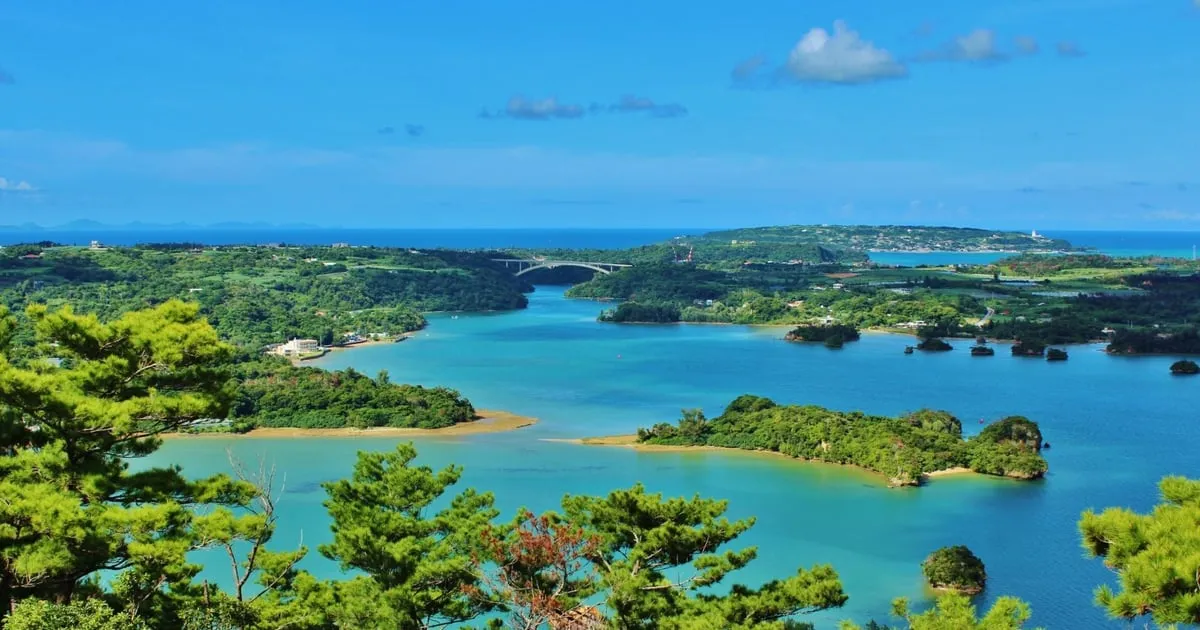
Matsushima: Scenic Bay Walk & Historic Temple Discovery
A private 2-3 hour walking tour of Zuiganji, Godaido and Fukuurajima with an optional Sendai Station departure, capped at 6 people.
- Cancellation
- Free cancellation 24h
- Operator
- DeepExperience, Inc.
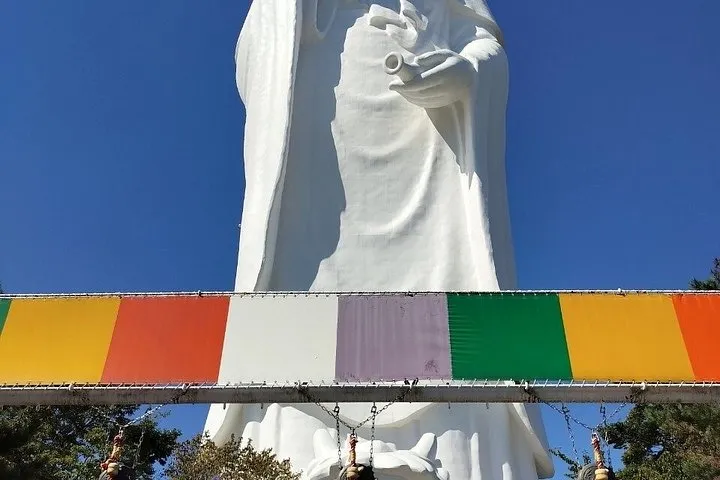
Matsushima Private Tour: Samurai, Oysters & Hotel Transfer
A private 6.5-hour Matsushima day with hotel transfer, bay cruise, temple visits, matcha and an oyster lunch, capped at 4 people.
- Cancellation
- Free cancellation 24h
- Operator
- Kazuyoshi Nagashima
Can you visit any of the Matsushima Bay islands on foot?
Yes, two islands are walkable from town, Fukuurajima over a 252-meter bridge and Oshima over the Togetsu Bridge, while most of the 260 islets are viewed only from boats or shore.
The bay is not a place you hike across. Of the hundreds of islets, only a handful take visitors, and that shapes how you spend the day. Fukuurajima is the walking island. It covers roughly 6 hectares and is joined to the mainland by a 252-meter vermilion bridge. On it you find about 250 kinds of plants, a walking path, a shrine to Benzaiten and shell mounds. It is 15 minutes on foot from JR Matsushima-Kaigan Station. Crossing the Fukuura Bridge costs $1.91 (¥300) for adults and $0.64 (¥100) for students, according to the town of Matsushima, and the bridge is open 8:30 to 17:00 from April to October and 8:30 to 16:30 from November to March. Oshima sits nearer the pier. The vermilion Togetsu Bridge reaches it in a 6-minute walk from Matsushima-Kaigan Station near the Namiuchihama car park. The island is said to have held 108 rock caves, and the bridge itself has a story, since the 2011 tsunami washed it away and it reopened in 2013. No admission fee is listed for it. Senganjima, the favourite island of Masamune Date, has no listed bridge or landing, so treat it as a view.
Shore stops that frame the islands
Godaido stands next to the Central Pier, 7 minutes on foot from the station, and is free to enter until dusk. You reach it over an open-slat bridge that wheelchairs cannot cross. The current building was rebuilt in 1604 by Date Masamune and is the oldest surviving Momoyama architecture in Tohoku. Its Five Wisdom Kings statues are shown only once every 33 years, last in 2006, with the next display planned for 2039.
Kanrantei, the old tea house, admits adults for $1.91 (¥300) and students for $0.64 (¥100,) with tea sets from $3.82 (¥600) on top. It opens 8:30 to 17:00 from April to October and 8:30 to 16:30 from November to March. Zuiganji, a 10-minute walk from the station, opens its gate at 8:30 am all year and charges $6.36 (¥1,000) for adults and $3.18 (¥500) for children, per the temple's own guide page, which also posts a fee revision notice. Entsuin, beside Zuiganji, is open 9:00 to 16:00 at $3.18 (¥500) for adults and $1.91 (¥300) for school students.
Sources: Matsushima Town, Matsushima Tourism Association, Matsushima Tourism Association, Zuiganji Temple.
How do you see the Matsushima Bay islands by boat?
Two operators run a scheduled 50-minute loop from the pier area, and Marubun alone also runs a 50-minute scheduled cruise to Shiogama.
The boat is the point of the bay. Large sightseeing boats leave from the Central Sightseeing Pier, 7 minutes on foot from JR Matsushima-Kaigan Station, with ticket holders queuing at Boarding Gate 1. The tourist association lists two scheduled cruises. One is the bay loop, run by both Matsushima Shimameguri Kankosen and Marubun Matsushima Kisen. The other is the run to Shiogama, operated by Marubun only. Both take 50 minutes at $9.54 (¥1,500) for adults and $4.77 (¥750) for elementary pupils, with younger children free, per the association's fare page. Matsushima Shimameguri's large boats Nioumaru and Dai-san Nioumaru carry 400 seats each, with four mid-size boats of 84 to 100 seats alongside. Small boats have no toilets, large and mid-size boats do. Nioumaru departs hourly from 9:00 to 16:00 all year, with the 16:00 sailing cancelled in winter, when the last boat leaves at 15:00. Extra sailings run at Golden Week and Obon. No reservation is needed, booking ahead gives 10% off, and children under elementary age cannot ride alone or use the second floor. Marubun's loop from Matsushima takes about 50 minutes, or about 40 minutes on a mid-size boat, with departures from 10:00 to 15:00 hourly and 10% off for advance booking accepted up to 30 minutes before departure. Its boarding point is Window 2 of the Matsushima Kaigan Rest House, 5 minutes on foot from the station, and you should arrive 10 minutes before departure. If you would rather not juggle timetables, the 1-Day Tour from Sendai: Matsushima Bay & Scenic Boat Cruise is $168 per person for 8 hours and puts the loop into a full bay day from the city.
The Marubun loop, class by class
Marubun sells the same boat in three classes, and the difference is the deck you sit on.
| Class | Deck | Adult fare | Child fare (elementary) |
|---|---|---|---|
| 2nd class | 1st floor | $9.54 (¥1,500) | $4.77 (¥750) |
| Green class | 2nd floor | $13.35 (¥2,100) | $6.68 (¥1,050) |
| 1st class | 3rd floor | $18.44 (¥2,900) | $9.22 (¥1,450) |
Seasonal and evening boats
Beyond the standard loop, two evening boats run during the autumn Light-Up. The Matsushima Bay Light-Up Cruise leaves the Central Pier at 17:00 on weekends and holidays, 40 minutes at $7.63 (¥1,200) for adults and $3.82 (¥600) for children. The Twilight Cruise runs daily from 1 October to 23 November, timed to sunset, 60 minutes at $9.54 (¥1,500) for adults and $4.77 (¥750) for children, or $8.59 (¥1,350) and $4.26 (¥670) booked online, per the tourist association's event page.
Marubun also runs an oyster hot pot cruise from November to late March, a New Year's Day sunrise cruise and an autumn-leaf light-up cruise from late October to late November, with fares not shown on its event page.
Buying tickets
Shimameguri tickets are sold at four offices in Matsushima: near Matsushima-Kaigan Station, at Matsushima Green Plaza, at the Central office closest to the large-boat pier, and at the Godaido office. Matsushima Station itself is a 20-minute walk from the pier area, so alight at Matsushima-Kaigan for the boats.
Sources: Matsushima Tourism Association, Matsushima Sightseeing Boats, Matsushima Sightseeing Boats, Matsushima Tourism Association.
How do I go to Matsushima Bay?
Take the train from Sendai, about thirty minutes and 14 km, to Matsushima-Kaigan Station, then walk 7 minutes to the cruise pier.
Matsushima is an easy day trip from Sendai. The town is about thirty minutes and roughly 14 km from the city, and Matsushima-Kaigan Station puts you within a 7-minute walk of the cruise pier. If you fly in, Sendai Airport is about 30 km from the Matsushima Ichinobo hotel and 28 km from Hotel Matsushima Taikanso, per the official tourism listing. Sleeping near the pier pays off for evening boats. Hotels around the bay include Komatsukan Kofu-tei, which runs a free shuttle from JR Matsushima Kaigan Station, along with Matsushima Ichinobo and Hotel Matsushima Taikanso. An alternative entry is from the other side of the bay. Marine Gate Shiogama, the Shiogama passenger terminal at Shiogama Port, is about 10 minutes on foot from JR Hon-Shiogama Station, and sightseeing cruises to Matsushima leave from it. From the same terminal, city ferries reach the Urato Islands, with one-way fares from Shiogama of $3.31 (¥520) to Katsurashima, $3.69 (¥580) to Nonoshima and Ishihama, and $4.01 (¥630) to Sabusawa and Hojima, and no service on Sundays, holidays, the turn of the year or mid-August.
By tour from Sendai
If you would rather skip the trains, the Sendai and Matsushima Day Tour Big Buddha Jogi Temple and Cruise runs 9 hours at $149.40 per person and includes the cruise. All bay days are compared on matsushima bay tours.
Source: MLIT Japan.
Is the famous haiku really by Basho, and did the islands save the town?
The haiku is probably not Basho's, but the islands did shield the town from the worst of the 2011 tsunami.
Two stories follow the Matsushima Bay Islands everywhere, and one of them is not what it seems. Start with the haiku. The verse about being lost for words before the islands is often attributed to Matsuo Basho. The earliest known publication, in 1820, attributes it instead to Tawara-bo. What is certain is that Basho did make Matsushima one of the goals of his journey north, so the bay belongs to his story even if the famous line may not. Then the tsunami. In 2011 the islands protected the area, which suffered relatively little damage, and the tourist association says Matsushima was helped by the islands of the bay and miraculously escaped destruction, though boats, shops and facilities were damaged. You still see traces of that day on the shore. The Togetsu Bridge to Oshima was washed away and reopened only in 2013. One last mix-up to avoid when you search. There is a different Matsushima, a coal power station on Matsushima Island in Saikai, Nagasaki. It has nothing to do with this bay in Miyagi.
What to do in Matsushima besides the boat?
Pair the boat with the shore temples, the two walkable islands and, in autumn, the evening light-ups.
A bay day works well as boat plus shore. The temples come first: Zuiganji, whose main hall was designated a national treasure in 1953 and its Kuri living quarters in 1959, then Entsuin next door, then Kanrantei above the water and Godaido by the pier. Fukuurajima and Oshima cover the walkable islands. From 24 October to 23 November the shore lights up. Matsushima Light-Up runs along the Zuiganji approach and at Kanrantei in the evenings and is cancelled in bad weather, on a strong quake or a tsunami advisory. Entsuin holds its own autumn-leaf light-up with tickets at $9.54 (¥1,500) for junior high and older and free for elementary and under. Zuiganji's night visit runs at $8.27 (¥1,300) on the day or $7.63 (¥1,200) online, and the Matsushima Rikyu light-up charges $8.27 (¥1,300) at the door, all per the association's event page. If you want the shore part guided, the Matsushima: Scenic Bay Walk & Historic Temple Discovery tour covers it in 2 to 3 hours at $78 per person. For food and stories with a local host, the Matsushima Private Tour: Samurai, Oysters & Hotel Transfer runs 6.5 hours at $222 per person. Every bay day is listed on matsushima bay tours.
Sources: Matsushima Tourism Association, Matsushima Tourism Association.
Frequently Asked Questions
What is Matsushima famous for?
About 260 pine-covered islets in a bay ranked one of the Three Views of Japan, seen on a 50-minute cruise from the Central Pier, with Zuiganji, Entsuin, Godaido and Kanrantei on the shore beside it. Book the loop through matsushima bay tours.
Where is the best place to see Matsushima Bay?
From the water first, on the bay loop, and then from one of the four classic viewpoints. Ogidani is the easiest of the four, showing the whole bay about 25 minutes on foot from Matsushima-Kaigan Station. The bay cruise day tour from Sendai covers the water part.
How do I go to Matsushima Bay?
Ride the train from Sendai, roughly 30 minutes and 14 km, to Matsushima-Kaigan Station, then walk 7 minutes to the cruise pier. The Sendai and Matsushima day tour does the transport for you.
How long is the Matsushima bay cruise?
The scheduled loop takes 50 minutes per the tourist association, and Marubun's mid-size boats do it in about 40 minutes. The sunset Twilight Cruise runs 60 minutes. The 1-day tour from Sendai includes the boat.
Do I need to book the bay cruise in advance?
No reservation is needed for Nioumaru, but booking ahead gives 10% off on both operators, and Marubun accepts advance bookings up to 30 minutes before departure. Arrive 10 minutes early at Marubun's ticket window. A guided bay day handles the tickets for you.
Can you walk to any of the islands?
Yes. Fukuurajima is reached over a 252-meter bridge, 15 minutes on foot from the station with a $1.91 (¥300) adult crossing fee set by the town, and Oshima is over the Togetsu Bridge, a 6-minute walk from the station with no listed fee. The bay walk and temple tour covers the shore on foot.
What is the most beautiful island in Japan?
No official winner exists, but Matsushima Bay's pine islets belong to one of the Three Views of Japan, and Senganjima inside the bay was the favourite island of Masamune Date. The private samurai and oyster tour adds a local host.
When do the boats stop running?
The standard loop runs hourly, with Nioumaru's last sailing at 16:00, moved to 15:00 in winter when the sun sets early, and Marubun's last at 15:00. A day tour from Sendai fixes the sailing time for you.
More Guides
- How to Get to Matsushima Bay from Sendai and Tokyo
How to get to Matsushima Bay in 2027: 40 minutes by train from Sendai, the Shinkansen from Tokyo, the stations and the boats. Plan your trip.
- Is Matsushima Bay Worth Visiting?
Is Matsushima Bay worth visiting in 2027? 260 pine islands, a 50-minute bay cruise, 40 minutes from Sendai. See if it fits your trip.
- When and Where to Eat Matsushima Bay Oysters
Matsushima Bay oysters in 2027: the October to March season, the grilled oyster huts and the fish market. Plan your oyster lunch now.